
Exploring Rum Subcategories
Updated: March 2026
Rum Styles at a Glance Rum is produced in over 100 countries with no single international classification framework. Styles are shaped by geography, language, law, and distilling tradition. This guide cuts through the noise and breaks down rum styles by the language and heritage of where they are made. For context on how those traditions developed, see our history of rum.
The Caribbean and the Americas produce the most rum, but over 100 countries make it. Despite what people might say, rum is regulated. Each country defines how producers can make and market their spirit, which means the label on a bottle is usually the best place to start, whether you are in a liquor store or browsing online.
Why Rum Styles Are Complicated
There have been many attempts to define rum styles, and none have fully stuck. Lines are being blurred, the category has outgrown some old clichés, and certain terms have hung around long past their usefulness.
Colour is the most persistent offender. The colour of rum is not a style. It tells you nothing about the processes used, the base ingredient, or where it was made. Most retailers still use it anyway, which perpetuates myths and leaves new rum drinkers none the wiser.
Geography would seem like a natural framework, and it is a good starting point, but it has limits. Distillers and brands want to do things their own way, and on a single small Caribbean island you can find wildly different philosophies sitting side by side. Just ask anyone who has spent time in Grenada or Barbados.
Unlike whisky, rum has no cohesive international classification framework. The absence of strong collective leadership is not helping the category move forward. Even well-reasoned proposals take years to gain traction. AOC Martinique took 20 years to establish. Jamaica’s GI took 10. The Gargano Classification arrived in 2015 and has yet to be widely adopted by the industry.
The most practical approach is a balance of geography, distilling method, and the descriptors that producers themselves are adopting. The best way to understand rum styles is probably the same way a good pot and column blend works: find the balance.
Language matters in rum, so we’ll use it as our guide here. Estimated breakdown of rum producers by language: around 50% English-speaking, 30% Spanish-speaking, and 10% French-speaking. On the consumer side, English and Spanish are closer to parity given how deeply rum is embedded in Latin American culture. So let’s start there.

English-Speaking Rum Styles
English-speaking rum covers a wide geography: Barbados, Bermuda, Belize, Canada, Cayman Islands, Guyana, Jamaica, Trinidad, the United States, Scotland, Ireland, Northern Ireland, Wales, and England. It is the largest share of global rum production by language and arguably the most varied in style.
A few terms you will find on liquor store shelves are worth demystifying before going further.
White or Silver Rum Clear rum is a better descriptor. This umbrella term covers light-bodied, clean, crisp spirits most commonly used in mixing. It is often associated with multi-column distilled rum that has been aged and then charcoal filtered back to clarity. But white rum can equally be unaged and genuinely flavourful. The colour tells you nothing about the process.
Dark or Black Rum Aged for an unspecified period in oak casks, dark rum is full-bodied with caramel flavours and is often sweetened, which can mask the base spirit underneath. Used for both sipping and mixing, and a staple in Tiki cocktails.
Demerara Rum Made exclusively in Guyana, where there is now one distillery producing it. Demerara rum carries EU GI recognition, making it one of the few protected rum designations in the English-speaking world.
Flavoured Rum Similar in construction to spiced rum, flavoured rum uses a young rum base with added flavours: coconut, banana, pineapple, coffee, chocolate, or nut being the most common. The base spirit is rarely the focus.
Gold, Golden, or Amber Rum Aged a little longer than white rum, typically up to four years in oak casks. The wood adds colour and a more complex flavour profile, making it suitable for both sipping and mixing.
High-Ester Rum Also called funky rum, high-ester rum is produced through extended, bacteria-rich fermentation using dunder and muck. The result is an intensely aromatic spirit dominated by overripe tropical fruit, particularly banana. Sometimes referred to as high hogo, from the French haut goût, meaning slightly spoiled but deeply flavourful.
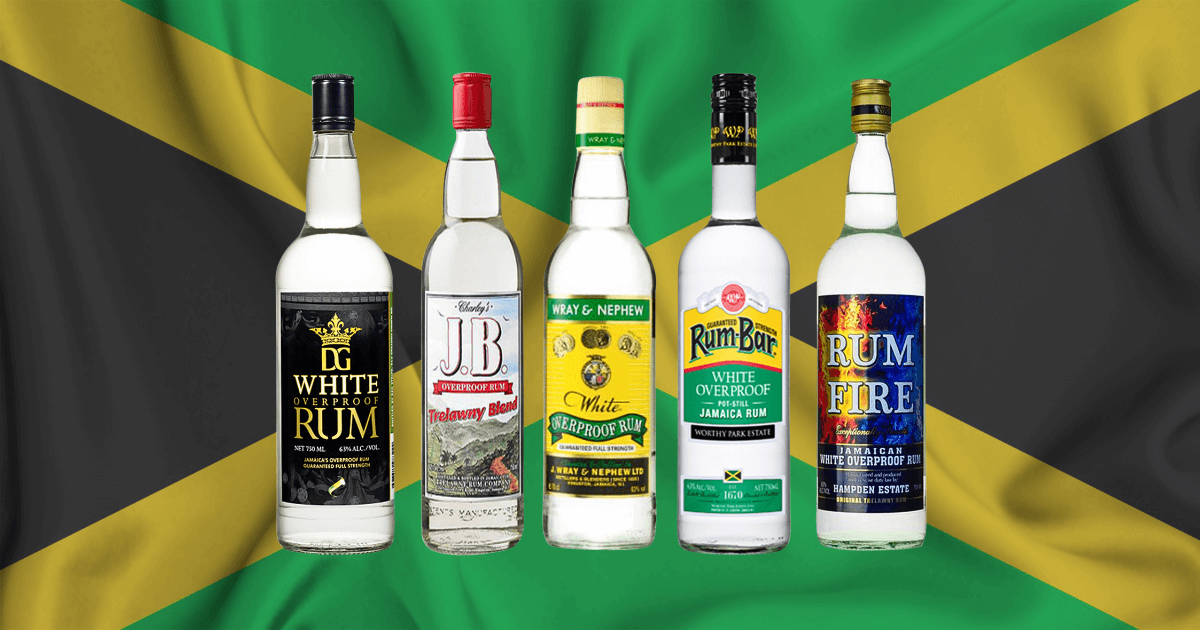
Overproof Rum Bottled at 50% ABV or above, often marked as 100 proof or 151 on the label. Overproof rum is not just stronger, it carries more intensity of flavour and is used in cocktails where a small amount needs to make an impact. A Jamaican staple and a Tiki bar essential.
Spiced Rum A young rum base infused with spices such as cinnamon, cloves, nutmeg, and vanilla, usually with added sweeteners or fruit flavours. Proof varies widely. It is one of the most commercially popular rum styles globally and one of the most divisive among serious rum drinkers.
Navy Rum Typically a blend of rums from Guyana and Jamaica, formulated to reflect the character of the grog historically issued as daily rations to Royal Navy sailors. Rich, dark, and full-bodied. The style carries genuine historical weight and remains a reference point for inter-island blending traditions.
Navy Strength Rum Usually bottled at 57% ABV, young, dark, and heavy on caramel. The ABV is not arbitrary: at 57%, gunpowder dampened with rum would still ignite, which was the Navy’s original proof test for its spirit supply.
XO Rum Mostly aged six years or more, though the term is not consistently defined across producers. Mount Gay XO blends rums aged from five to seventeen years. Plantation’s XO expressions range from eight to fifteen. Read the label rather than relying on the initials alone.
Queen’s Share Rum A term with roots in Cognac production that has found particular traction in American rum and is spreading. It refers to a specific cut in the spirit run, the transitional distillate between the rich hearts and the bitter tails, considered the sweetest and most complex fraction of the run. The seconds are redistilled to produce a concentrated, aromatic spirit. A niche but genuinely interesting category worth seeking out.
Single Estate Rum Rum made entirely at one estate from its own raw material. For a molasses rum to qualify, the producer needs their own sugar refinery to produce that molasses in-house. That is a significant commitment of land, infrastructure, and capital, which tends to be reflected in the price on the bottle. When you see single estate on a label it means full provenance from field to glass, and that level of traceability is increasingly valued by serious rum drinkers and we have a filter to discover single estate rums on our world rum map.
French-Speaking Rum Styles
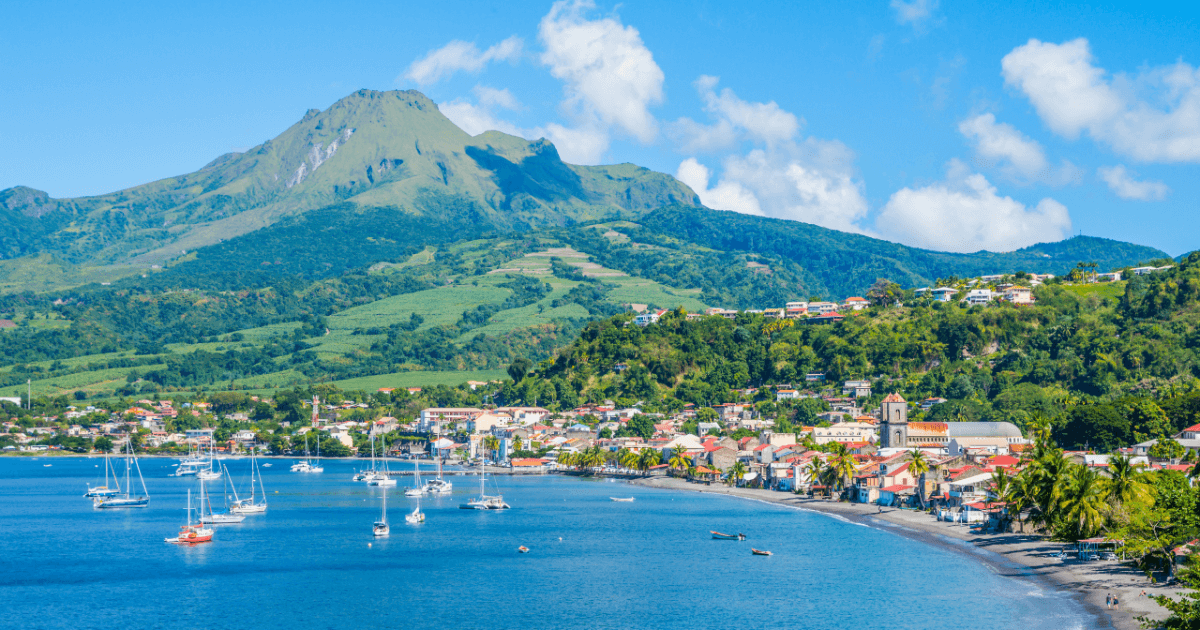
French-speaking rum comes from Guadeloupe, Martinique, Haiti, Saint Barts, French Guiana, Réunion, French Polynesia, and New Caledonia. It is the most tightly regulated rum tradition in the world and the one with the most precisely defined vocabulary.
A quick clarification upfront: Rhum is simply the French word for rum. The spelling alone tells you nothing about style. Rhum Agricole, on the other hand, refers to a specific production method and is a genuine style descriptor.
The French refer to molasses-based rum as rhum industriel. No romance there, as they say. It is worth noting that more molasses rum is produced across French-speaking territories than cane juice rum, despite Rhum Agricole getting most of the international attention. Grand Arôme, produced on Martinique, is a high-ester molasses rum made from fermented molasses and vinasse, the leftover lees from a previous distillation, the French equivalent of dunder. Réunion produces both cane juice and molasses rum, making it one of the more versatile French-speaking producers.
Martinique and Guadeloupe operate under the strictest rum regulations in the world, governed by AOC and PGI frameworks that control everything from harvest dates and fermentation times to still specifications and labelling. All AOC rum is distilled on Creole column stills developed locally on Martinique, and aging is done in French oak rather than the American barrels that dominate the rest of the rum world.
The AOC age and style classifications break down as follows:
Rhum Blanc Clear rum, rested for a minimum of six weeks in large oak vats called foudres de chêne, which impart minimal colour. No additives permitted.
Rhum Agricole AOC Martinique Rhum Agricole aged for at least three months without additives. The entry point for the style.
Rhum Paille Straw-coloured rum, aged less than the three years required for Rhum Vieux status.
Rhum Elevé Sous Bois Aged a minimum of one year, typically between twelve and eighteen months in French oak.
Rhum Vieux Aged a minimum of three years in barrels of no more than 650 litres. VO carries the same three-year minimum.
VSOP, Réserve Spéciale, Cuvée Spéciale, Très Vieux All require a minimum of four years aging.
Extra Vieux, Grande Réserve, Hors d’Âge, XO All require a minimum of six years. Réserve Spéciale, Vieille Réserve, and Cuvée Spéciale sometimes appear in place of XO depending on the producer.
Millésime A vintage bottling from a specific year, the most traceable and often most collectible expressions in the French rum world.
Rhum Arrangé A French favourite rooted in Réunion’s culture. Lower ABV rum macerated with fruit and sweetened, sitting closer to a rum liqueur than a straight spirit. Accessible, aromatic, and deeply local in character.
As well as minimum age requirements, AOC rums must come from designated production areas, and there are genuine flavour nuances and price differences between the classification tiers. A few years ago, on a trade visit to Cognac, we learned that Fine Champagne refers to soil quality rather than the famous drink. French marketing at its finest. The best way to understand these distinctions is to taste as many as you can, ask producers questions directly, and let the glass do the explaining.
Spanish-Speaking Rum Styles
Spanish-speaking rum production spans Colombia, Cuba, the Dominican Republic, Ecuador, Guatemala, Panama, Peru, the Philippines, Puerto Rico, Trinidad, and Venezuela. It is the style most people encounter first, given how dominant Latin rum is in the global commercial market.
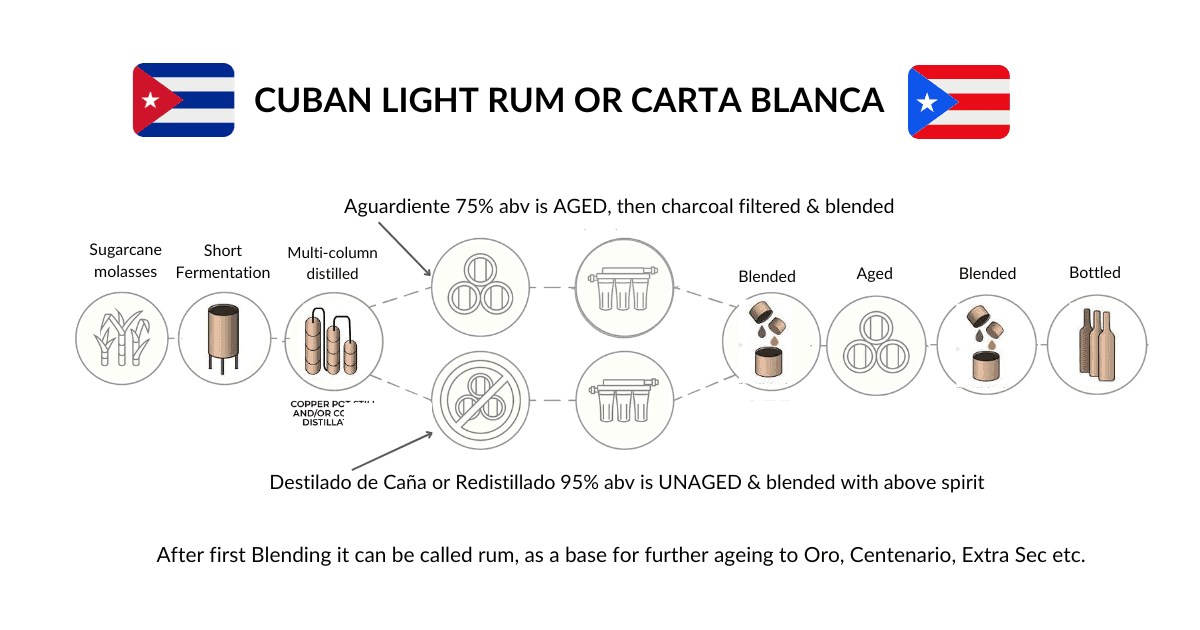
The generic description of Spanish-style rum as light, column-distilled, and molasses-based is not wrong, but it is incomplete. The lightest commercial rums in the world come from this tradition, but so do some of the most complex aged expressions. What connects them is the distilling heritage, rooted in Spanish sherry and brandy culture, particularly the Solera system.
In a Solera setup, barrels called criaderas are connected in a tiered structure. When rum is drawn off for bottling, younger rum is added to replenish the blend, keeping the mother spirit continuous. The result is always a mix of ages. Where a number appears on the bottle it typically represents the oldest rum in the blend rather than the youngest, which is worth keeping in mind when comparing labels. Age designations vary between brands, so the guide below is a working reference rather than a universal standard.
Carta Blanca or Superior A blend of rums aged one to two years, charcoal filtered to clarity.
Añejo Blanco White rum aged one year.
Claro A blend of rums aged two to three years, if Venezuelan.
Carta Oro (Gold) A blend of rums aged three to five years.
Añejo Not formally defined but typically aged two to five years depending on the producer.
Carta Negra (Black) Aged up to four years.
Añejo Especial or Viejo Aged up to five years.
Añejo Reserva Aged five to six years.
Extra Viejo Can range from three to eight years depending on the producer.
Extra Añejo Usually aged eight to twelve years in oak.
Gran Reserva Often a blend with an age statement on the bottle representing the oldest component.
Centenario Can be a blend of rums aged up to twenty years. The name suggests century-level prestige, which is exactly the intention.
When you see designations like Ron de Venezuela, Ron Cubano, or Ron Dominicano on a label, it signals that the rum is regulated under a protected geographic indication with specific restrictions on how it can be produced and labelled. These are not just marketing terms. For more on how those regulations work in practice, see our what is rum guide.
One final note on the Solera system: it produces consistency and approachability, which is why Spanish-style rum has such broad commercial appeal. But it also means that age statements in this tradition require a different kind of reading than you would apply to a single vintage Jamaican or a millésime Martinique. Context matters.
Rum Distilling Techniques
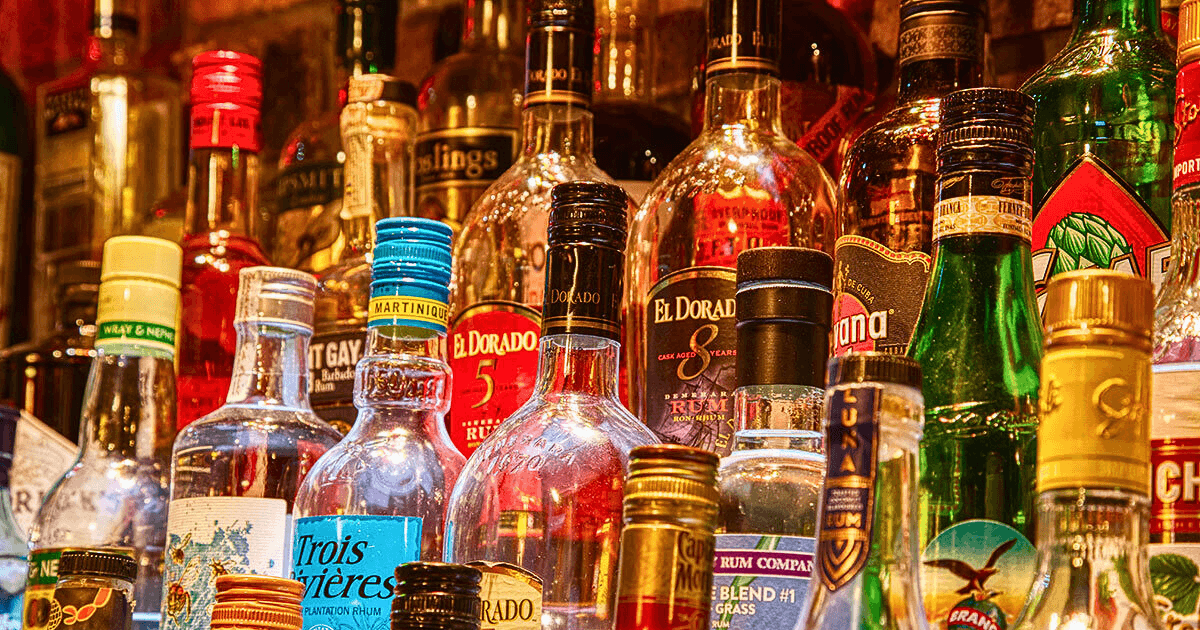
Rum and whisky share the same broad process: farming, fermentation, distilling, and ageing. But where whisky’s character is shaped primarily by distillation and maturation, rum gives fermentation a much bigger role. The decisions made in the fermentation tank, how long, what yeast, what additions, are as defining as anything that happens in the still or the barrel. Short, medium, or long fermentation each produce a fundamentally different spirit, and that choice is one of the clearest markers of a distillery’s house style.
The Gargano Classification attempted to formalise rum techniques into a workable framework, and it is a serious piece of work. But it has not crossed over into everyday use for most rum drinkers, and the industry has been slow to adopt it universally.
The term Single, when you see it on a rum label, carries the same meaning as in whisky: made at one distillery from that distillery’s own production. Pure Single Agricole Rhum, Pure Single Rum, and Single Blended Rum on a label signal genuine commitment to provenance and process. They tend to command a premium, and usually justify it.
One persistent myth worth addressing: age is not always better. It depends entirely on the flavour profile you are looking for and how you plan to drink it. A well-made unaged cane juice rum can outperform a mediocre ten-year-old in the glass depending on the occasion. The broader trend in rum right now is moving toward more flavour-forward expressions, often achieved through longer fermentation rather than extended barrel time. Ultimately it comes down to what you prefer, and the only way to find that out is to try things.
Ask your local distillery about new expressions, taste widely, and use the rum profiles on our Rum Regions Maps to explore producers by where they are made and how they work.
Summary of Rum Styles
Rum styles are shaped by where rum is made, who makes it, and what laws apply. Here is what to take away.
Rum is regulated country by country, which means bottle labels are a reasonable starting point for understanding what is in your glass. But label restrictions often limit what producers can say, so brand websites and a good local rum shop will frequently tell you more than the bottle itself.
The absence of a single international authority defining rum styles has created a landscape of confusing and sometimes misleading marketing. Colour-based labelling in English-speaking markets persists despite telling you almost nothing about process. The category needs a clearer, more accessible classification framework, and the conversation about what that looks like is ongoing.
English-speaking rum styles are most commonly marketed by colour, which is not particularly useful. More meaningful markers are the type of still used, fermentation length, proof, and age, where numbers on the label tend to represent the youngest rum in the bottle rather than the oldest.
French-speaking rum styles operate under the strictest rules in the category. Martinique and Guadeloupe Rhum Agricole are governed by AOC law from field to bottle. The aging terminology borrows from Cognac, a system that was simplified for the English trade centuries ago and still causes confusion today.
Spanish-speaking rum styles are often column-distilled with shorter fermentation, though not always molasses-based. The Latin philosophy leans toward the cask driving the flavour, with the Solera system central to how age and complexity are built. Age and quality terms in Spanish rum are widely used but not standardised across producers, so reading labels with context matters.
Rum styles are evolving. New producers, new techniques, and long-overdue industry conversations are all pushing the category forward. Watch this space.
Our site has over 1,500 producers. Read the fun facts on each profile, explore neighbouring producers, and use that to build your own frame of reference for what makes each style distinct. Browse the Rum Guides to keep up with how the category is changing.
Further reading: Rum Wonk, The Rum Lab, The Lone Caner
